
Okayama, Japan
How is it produced?
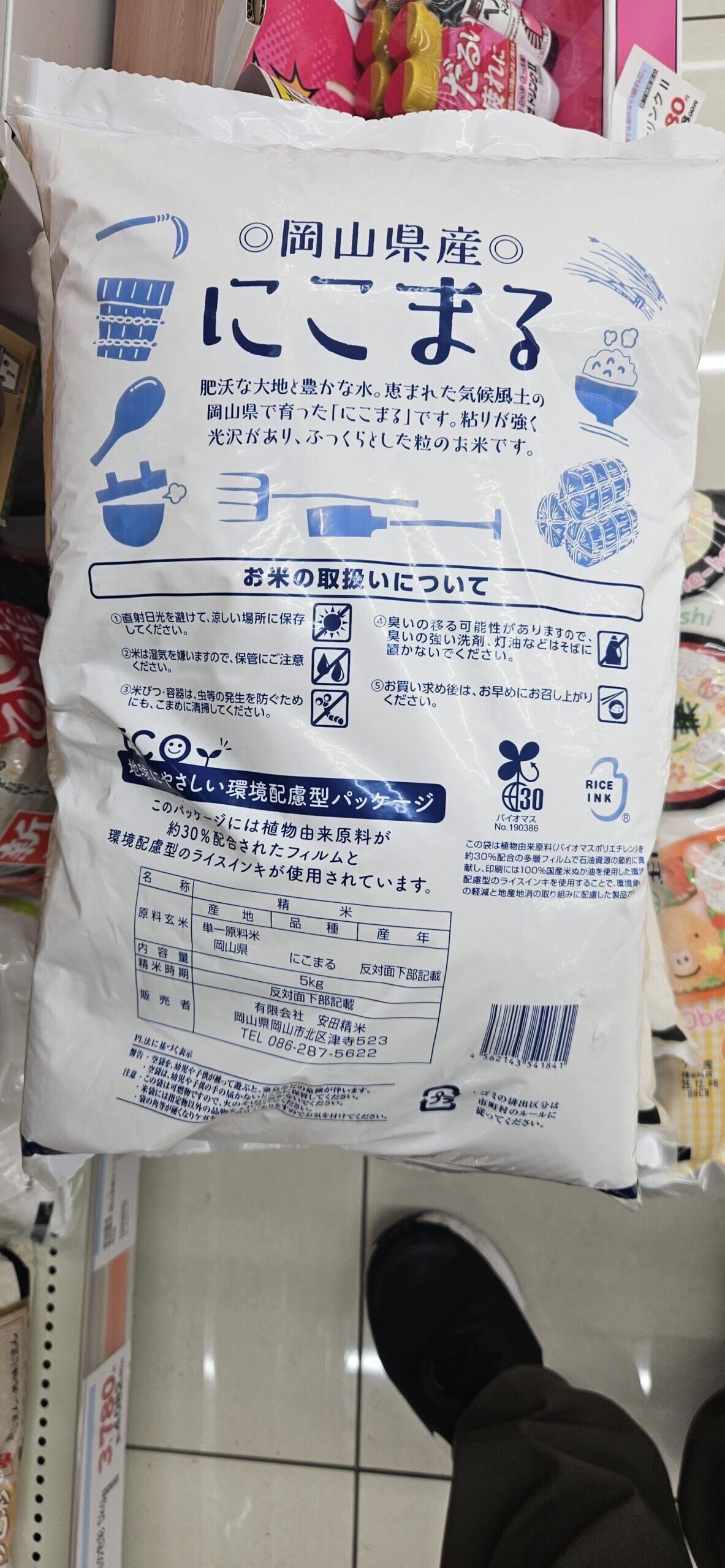
The specific rice in question is produced by local small scale farmers in the Okayama prefecture in Japan.
Describe the supply chain to the store shelf in Canada:
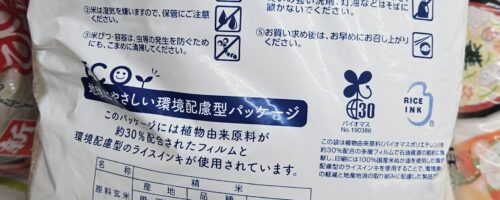
This rice went from the local farmer to the wholesaler company Yasuda Seimei. This company in turn sold it to the grocery store which then sells to regular consumers in Japan.
What is the power balance between the producer and seller?
The power balance in this instance reside primarily with the wholesaler and the grocery store chains. The farmer and the final consumer both have limited say in the situation. The consumer has been being charged higher and higher prices but the profits are not making their way back in same amounts to the farmer.
Can you recommend changes to the system to improve the balance?
While the small scale farmers do have some cooperates they still do not have enough power to benefit. the consumers generally are not organised enough to push back against the ever increasing prices of the rice. So changes to the system would likely require government intervention with the government instituting rules and support for both the farmers and the consumers so both parties can benefit more economically.
Additionally if possible it would likely be to both the farmers and consumers benefit if there was more opportunities to buy directly however due to the scale of consumption and production this may not be feasible for everyone.
References/Resources:
Dinçsoy, M., Dinçsoy, E. & Ichiminami, M. (2018). Long‑term change of agricultural production in Okayama Prefecture in terms of rice, wheat and barley. Journal of the Faculty of Environmental Science and Technology, Okayama University, 23, 1-21.
Fujimoto, T. (2010). Market structure and consumer knowledge in Japanese food supply chains. Asian Economic Policy Review, 5(1), 123–140.
Grant, R.W. and Keohane, R.O. (2005). Accountability and abuses of power in world politics. The American Political Science Review. 99 (1), 29-43.
Hayami, Y., & Godo, Y. (2005). Development of the Japanese rice economy: Institutions and productivity growth. Oxford University Press.
Japan Agricultural Cooperatives [JA]. (2014). About JA cooperatives. Japan Agricultural Cooperatives. https://www.ja-group.or.jp/english/
Japanese Rice Distribution System. (n.d.). Japanese rice distribution system overview. ERIC Document RESUME. https://files.eric.ed.gov/fulltext/ED330610.pdf
Japanese rice producer survey. (2025). 2025年日本米生産者調査. FNN. https://www.fnn.jp/articles/-/878559
Kingston, J. (2013). Japan’s quiet transformation: Social change and civil society in the 21st century. Routledge.
Ministry of Agriculture, Forestry and Fisheries. (2025). THE 96th statistical yearbook of the Ministry of Agriculture, Forestry and Fisheries: Rice — supply, demand, and stocks. Government of Japan. https://www.maff.go.jp/e/data/stat/96th/index.html
Ministry of Foreign Affairs of Japan. (n.d.). Import policy on rice under WTO minimum access. Government of Japan. https://www.mofa.go.jp/region/n- america/us/economy/date/413/413-2.html
Nippon.com. (2025, February 17). Japan releases stockpiled rice to tackle soaring prices. Nippon.com. https://www.nippon.com/en/japan-data/h02314/
Ogawa, T. (2025). 農業政策と米不足の構造的要因 [Structural causes of Japan’s rice shortage]. 農業経済ジャーナル, 48(1), 101–118.
Organisation for Economic Co‑operation and Development. (2009). Agricultural policy monitoring and evaluation: Japan. OECD Publishing.
Organisation for Economic Co‑operation and Development. (2020). Agricultural policy monitoring and evaluation 2020. OECD Publishing.
Organisation for Economic Co‑operation and Development. (2021). Agricultural policy monitoring and evaluation 2021: Addressing the challenges facing food systems. OECD Publishing.
Organisation for Economic Co‑operation and Development. (2023). Agricultural policy monitoring and evaluation 2023: Adapting agriculture to climate change. OECD Publishing.
Rodrik, D. (2011). The globalization paradox: Democracy and the future of the world economy. W. W. Norton & Company.
Sanders, R. (2015). The politics of agriculture in Japan. Routledge.
Sato, M. (2018). Food systems and consumer awareness in Japan: The case of rice. Journal of Rural Studies, 62, 45–55.
Stiglitz, J. (2002). Globalization and its discontents. W. W. Norton & Company.
Togo, K. (2006). Japan’s political economy: The institutional foundations of the Japanese economic system. Routledge.
World Trade Organization. (2024). Trade policy review: Japan. WTO Publishing.
Yamamoto, H. (2012). Japanese agriculture and consumer perceptions: Understanding the rice market. Japan Agricultural Review, 45(2), 77–92.
Yasuda Seimei Co., Ltd. (n.d.). 会社概要. https://www.yasuda-seimei.jp