
Indian Tea Association: Royal Exchange, 6 Netaji Subhas Road, Kolkata 700001, India.
How is it produced?
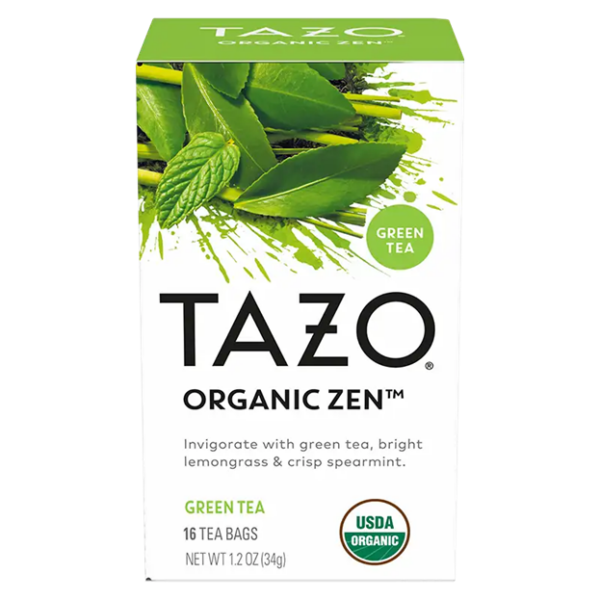
Tazo green tea is grown primarily in China, India, and Japan, where tea cultivation relies on labour‑intensive agricultural practices. Workers harvest tea leaves by hand or with simple tools, often under conditions marked by low wages, limited labour protections, and exposure to agrochemicals (International Labour Organization, 2021). Many plantations operate within long‑standing colonial‑era systems, especially in regions like Assam, where workers live in employer‑controlled housing and have limited access to healthcare or education (BBC News, 2020). Environmental impacts, such as soil depletion, pesticide runoff, and biodiversity loss, are common in monoculture tea systems (Ethical Consumer, 2023).
Describe the supply chain to the store shelf in Canada:
After harvesting, tea leaves are processed locally (steamed, dried, or pan‑fired), then sold to international brokers or directly to multinational corporations. Tazo’s corporate parent, now Lipton Teas & Infusions, sources tea globally and blends, packages, and brands the product in North America. The movement of tea across borders is enabled by WTO trade rules, which reduce tariffs and standardize customs procedures (World Trade Organization, 2023). Once packaged, Tazo tea moves through regional trade agreements such as CUSMA/USMCA, allowing efficient distribution to Canadian retailers (Government of Canada, 2020). The final product reaches grocery shelves through national distributors and retail chains.
What is the power balance between the producer and seller?
The power imbalance is significant. Tea workers and smallholder farmers receive only a fraction of the final retail price, while multinational corporations capture most of the value through branding, marketing, and control over distribution. Ellwood (2015) describes this as a core feature of globalization: producers in the Global South bear the risks and environmental costs, while corporations in the Global North accumulate profits. Intellectual‑property protections under TRIPS further strengthen corporate control by safeguarding branding and proprietary blends (Sell, 2020). Producers have limited bargaining power, while corporations can switch suppliers, negotiate lower prices, and shape global demand.
Can you recommend changes to the system to improve the balance?
A more equitable system would require structural, not cosmetic, changes. These include:
- Living‑wage standards enforced across the global tea sector, supported by binding international labour agreements rather than voluntary certifications.
- Stronger environmental protections to reduce pesticide exposure and soil degradation, with corporations sharing the cost of sustainable farming rather than shifting it onto producers.
- Transparent pricing models, where corporations disclose how much of the retail price reaches farmers.
- Support for smallholder cooperatives, giving producers collective bargaining power.
- Reforms to trade and IP regimes, ensuring they do not disproportionately benefit corporations at the expense of growers.
- Independent monitoring, rather than corporate‑controlled sustainability audits, to ensure accountability.
As Ellwood (2015) argues, globalization is shaped by political choices, not inevitabilities. Shifting power toward producers requires rethinking the rules that govern global trade and corporate behaviour.
References/Resources:
BBC News. (2020). Assam tea workers: Low wages and poor conditions on plantations. https://www.bbc.com/news/world-asia-india-53352870
Ellwood, W. (2015). Globalization: Buying and selling the world (4th ed.). New Internationalist.
Ethical Consumer. (2023). Tea: Ethical issues and company ratings. https://www.ethicalconsumer.org/food-drink/tea
Government of Canada. (2020). Canada–United States–Mexico Agreement (CUSMA/USMCA). https://www.international.gc.ca (international.gc.ca in Bing)
International Labour Organization. (2021). Decent work in the tea sector. https://www.ilo.org/global/topics/sdg-2030/goal-8/WCMS_760709
Lipton Teas & Infusions. (2023). Our brands: Tazo. https://www.liptonteas.com
Sell, S. K. (2020). Intellectual property and the global political economy. International Studies Review, 22(3), 758–786.
Tazo. (2022). Tazo Regenerative Organic Roadmap. https://www.tazo.com/sustainability
World Trade Organization. (2023). Understanding the WTO: The agreements. https://www.wto.org