
Dak Nong, Duc An Town, Dak Nong Vietnam
How is it produced?
Black pepper is produced from Piper nigrum vine and is grown mainly in Vietnam, India, Indonesia, and Brazil. The harvesting of black pepper is very labour intensive as it involves pruning, fertilizing, weeding, and peeling and drying the peppercorns, all by hand. Black pepper farmers face a variety of challenges including a lack of cultivation technologies and knowledge, volatile global prices, and crop yield fluctuations due to climate change, disease, and pests. Furthermore, women dominate the black pepper labor force where they face gender pay gaps and their ability to access opportunities and education is limited.
Describe the supply chain to the store shelf in Canada:
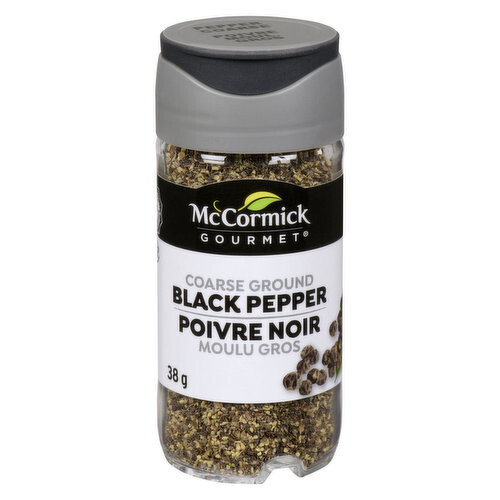
From the farm, black pepper is sold to local traders, or intermediaries, for assembly, quality control, and grading. Within ten days, this product is ready for to be exported to international markets for processing. Multinational corporations, such as McCormick, receive the black pepper and send it to one of their facilities in North America for further processing which includes separation, pasteurization, grinding, blending, and packaging. Black pepper is then transported from these facilities directly to grocery store shelves.
What is the power balance between the producer and seller?
Black pepper farmers obtain a very small portion of the final value and all the risk, while multinational corporations monopolize the post-harvest processing infrastructure which allows them to capture most of the value. For example, McCormick, a multinational corporation leading the world spice industry, dominates the trading, processing, packaging, and marketing of black pepper. Multinational corporations are better able to manage volatility in the global market, not to mention they benefit from tax cuts, resulting in excess money being used for investments, the stock-market, and short-term speculation, while developing nations reduce wages, cut costs, and destroy the environment in an effort to remain competitive.
Can you recommend changes to the system to improve the balance?
To improve the balance in the system there must be accountability. Multinational corporations, such as McCormick, are holding themselves accountable by making commitments to sustainability, fair sourcing practices, and promises to support women and improve working conditions. Additionally, there are several non-governmental organizations, international civil groups, and social movements trying to reform the agricultural sector that would help correct the imbalances in the black pepper supply chain and hold multinational corporations accountable such as the Rainforest Alliance which attempts to help black pepper farmers by improving wages, working conditions and workers rights by introducing mandatory certification and auditing systems.
References/Resources:
Bogomolova, S., Lesar, L., Baum, N., Jardine, B., Lockshin, L., Loch, A., & Buckley, J. (2026). Exploring the intensity of power asymmetry in food supply systems: an application of systems thinking. Industrial Marketing Management, 133, 53-66. https://doi.org/10.1016/j.indmarman.2026.01.002
Ellwood, W. (2015). Globalization: Buying and selling the world (4th ed). Between the Lines.
Fiolhais, M. (2024). Rainforest Alliance Certified Herbs and Spices: Creating a More Sustainable Sector. Rainforest Alliance. https://www.rainforest-alliance.org/insights/certified-herbs-and-spices-creating-a-more-sustainable-sector/
Fitzpatrick, J. (2025). Cambodian pepper value chain analysis. Deutsche Gesellschaft für Internationale Zusammenarbeit. https://www.asean-agrifood.org/wp-content/uploads/2025/06/Report_Cambodian-Pepper-Value-Chain-Analysis.pdf
International Finance Corporation (2024). Reaping equality: Creating sustainable pepper supply chains by strengthening the role of female farmers in Viet Nam. World Bank Group. https://www.ifc.org/en/insights-reports/2024/reaping-equality–creating-sustainable-pepper-supply-chains-by-s
Karmawati, E., Ardana, I. K., Siswanto, & Soetopo, D. (2020). Factors effecting pepper production and quality in several production center. In IOP Conference Series: Earth and Environmental Science, 418(1), 012051. https://doi.org/10.1088/1755-1315/418/1/012051
Lupo, L. (2010). McCormick Spices. Quality Assurance and Food Safety. https://www.qualityassurancemag.com/article/qa1006-coverstory/
Tarigan, N., Wahyono, T. E., Perkasa, G., Maris, P., Rizal, M., & Kardinan, A. (2023). An overview of black pepper: cultivation and challenges. Jurnal Ilmiah Agrineca, 23(2), 157-171. https://doi.org/10.36728/afp.v23i2.2636