
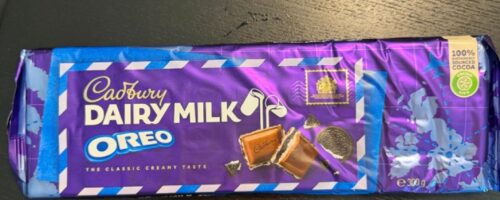
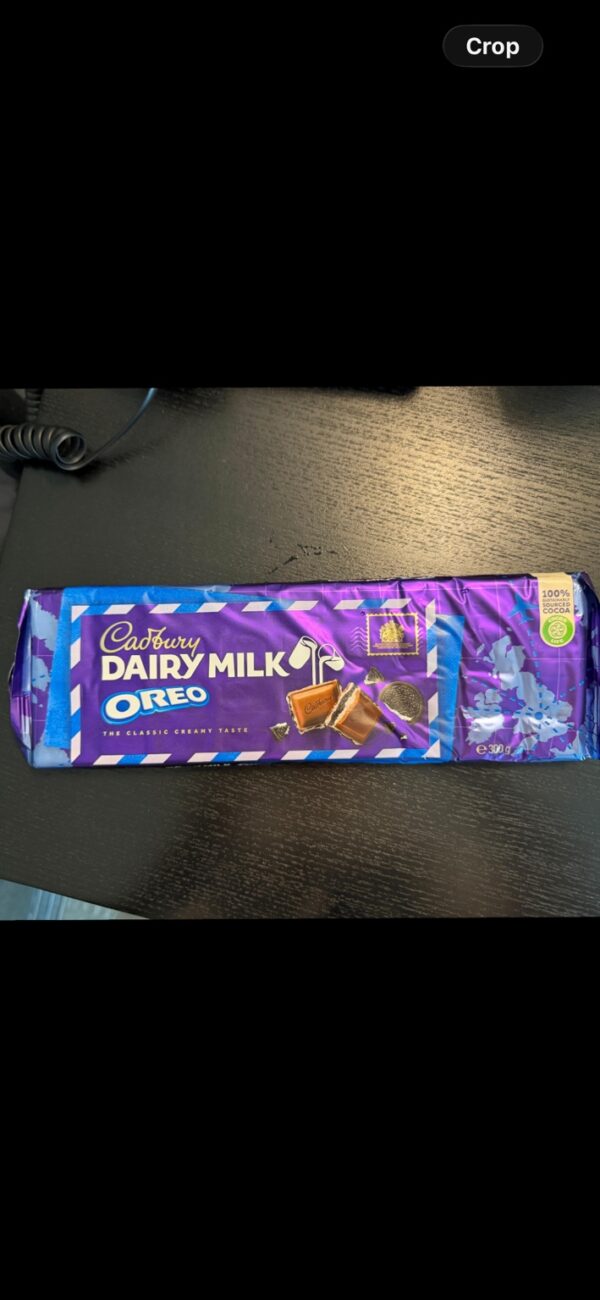
Abidjan, Côte d’Ivoire
How is it produced?
Cocoa is grown mainly by smallholder farmers in cocoa-producing countries such as Côte d’Ivoire and Ghana. Farmers harvest cocoa pods, remove the beans, ferment them, dry them, and sell them through cocoa traders or supply chains. The cocoa is then processed into cocoa ingredients and used by companies such as Mondelēz to make chocolate products like Cadbury Dairy Milk Oreo.
Describe the supply chain to the store shelf in Canada:
The cocoa is harvested from cocoa-growing nations like Côte d’Ivoire and Ghana. It is then processed by various companies, including traders, processors, and manufacturers, to become a part of my product called Cadbury Dairy Milk Oreo bar. The label of the product states that it was manufactured in Austria by Mondelēz using non-EU cocoa. The chocolate is then distributed all over the world and reaches Canadian supermarkets.
What is the power balance between the producer and seller?
There is a disparity between power held by multinationals, processors, retailers, and brands compared to cocoa farmers in terms of influence. It should be noted that cocoa farmers are at the production stage as suppliers of the main ingredient, but their percentage of total revenue received is significantly lower. Thus, the greater influence lies with such companies as Mondelēz, which have more control over price formation, processing, and marketing of chocolate.
Can you recommend changes to the system to improve the balance?
This system can be improved through ensuring that the cocoa farmers earn enough to meet their basic needs and also through earning a bigger portion of the total worth of the chocolate. There is a need for companies to increase transparency in their supply chains, provide better farmgate prices and assure everyone that the cocoa they produce is not associated with deforestation activities. Governments and companies have an added role of increasing child labour inspections and ensuring access to education as well as sustainable farming practices like agroforestry.
References/Resources:
Boysen, O., Ferrari, E., Nechifor, V., & Tillie, P. (2023). Earn a living? What the Côte d’Ivoire–Ghana cocoa living income differential might deliver on its promise. Food Policy, 114, Article 102389. https://doi.org/10.1016/j.foodpol.2022.102389
Ellwood, W. (2015). Globalisation: Buying and selling the world. New Internationalist.
Mondelēz International. (2024). Cocoa Life 2023 Cocoa & Forests Initiative progress report: Progress in a changing cocoa landscape. https://www.cocoalife.org/
Sadhu, S., Kysia, K., Onyango, L., Zinnes, C., Lord, S., Monnard, A., & Rojas Arellano, I. (2020). NORC final report: Assessing progress in reducing child labour in cocoa production in cocoa-growing areas of Côte d’Ivoire and Ghana. NORC at the University of Chicago. https://www.norc.org/