

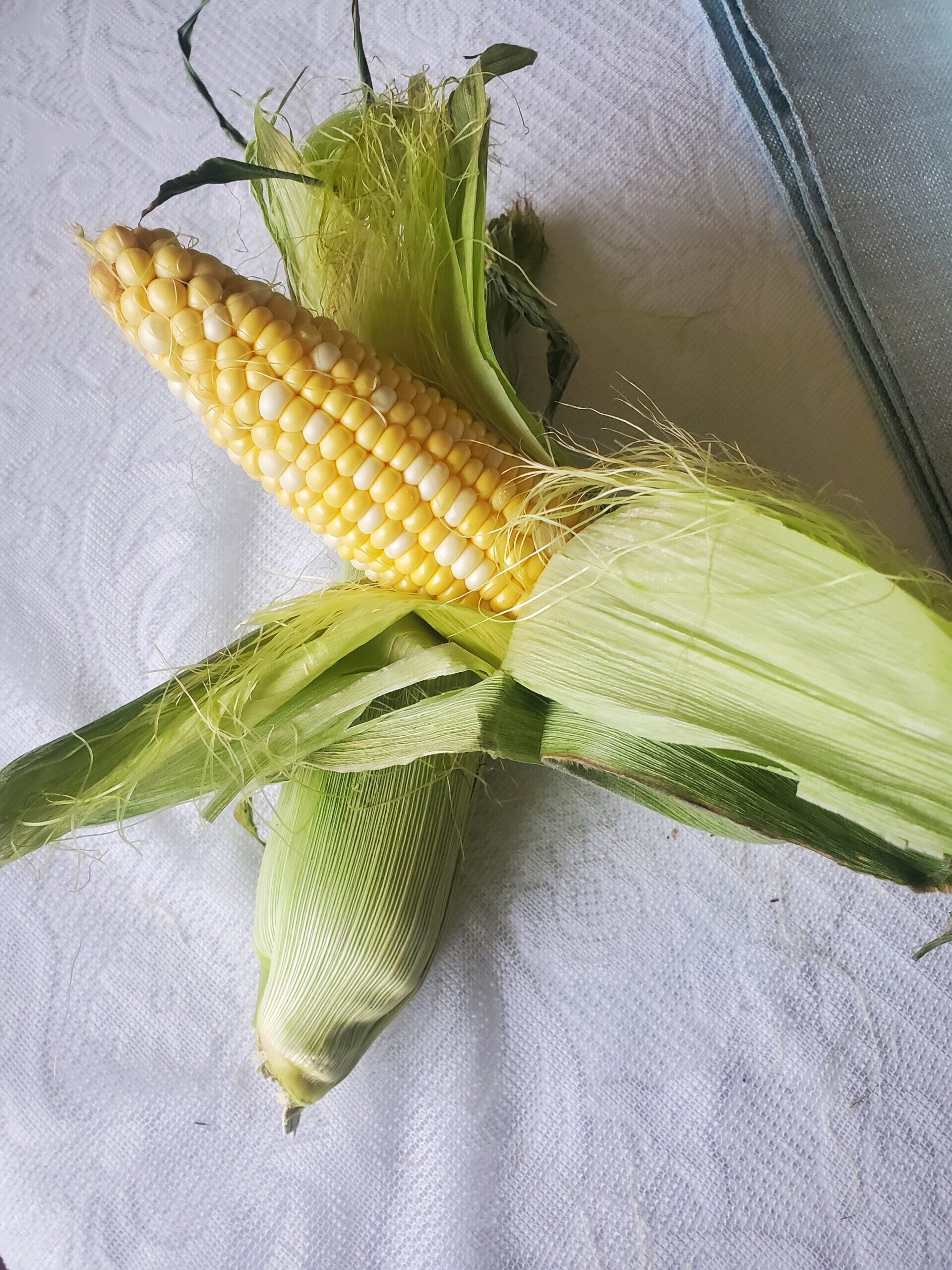
Taber, Alberta
How is it produced?
Several varieties of corn are grown in Taber, Alberta where there is a micro-climate that makes it sweet. There are two farms that grow it under the Taber Corn certification.
Describe the supply chain to the store shelf in Canada:
Distributed by the farms to corn stands throughout Alberta.
What is the power balance between the producer and seller?
The producers/sellers are the farmers who hire Mexican migrant workers. These temporary workers are facilitated through CUSMA and the Seasonal Agricultural Worker Program. The power differential is huge, and the workers are vulnerable to injustices and abuses without recourse. The systemic imbalance created by economic disparities is made worse by neoliberal capitalistic priorities in policy makers.
Can you recommend changes to the system to improve the balance?
Continued reforms to Canada’s migrant worker programs that empower and protect temporary workers from potential abuses. In the larger picture, a move away from neoliberal economics that strip countries of their power of democracy and equality.
References/Resources:
Amnesty International. (2025, January). “Canada Has Destroyed Me” Labour Exploitation of Migrant Workers in Canada. https://amnesty.ca/wp-content/uploads/2025/01/AMR_20_8872_2025-EN.pdf
Binford, L. (2009). From Fields of Power to Fields of Sweat: the dual process of constructing temporary migrant labour in Mexico and Canada. Third World Quarterly, 30(3), 503–517. https://doi.org/10.1080/01436590902742297
Canada Grains Council. (2025, January 6). CGC News: Canada Grains Council Welcomes CUSMA Panel Decision on Genetically Modified Corn. https://canadagrainscouncil.ca/cgc-news/canada-grains-council-welcomes-cusma-panel-decision-on-genetically-modified-corn/
Discover Taber. (2026). Town of Taber: https://www.taber.ca/discover-taber
Gabriel, C. & Macdonald, L. (2012). Debates on Temporary Agricultural Worker Migration in the North American Context. In Lenard, P.T., & Straehle, C. (Ed.) Legislated Inequality : Temporary Labour Migration in Canada. (pp. 95-116). McGill-Queen’s University Press.
Ellwood, W. (2016). Globalization (4th ed.). ACP – Between the Lines. https://bookshelf.vitalsource.com/books/9781771132466
Government of Canada. (2026, September 14). Canada-Mexico Relations. https://www.international.gc.ca/country-pays/mexico-mexique/relations.aspx?lang=eng
Government of Canada. (2023, June 9). Notice of intention to join the consultations as a third Party – Mexican measures concerning genetically engineered products. https://www.international.gc.ca/trade-commerce/trade-agreements-accords-commerciaux/agr-acc/cusma-aceum/notice-mexico-gep-avis-mexique-pgm.aspx?lang=eng
Johnson Fresh Farms. (n.d.). About Us. https://www.johnsonfreshfarms.com/our-corn
O’Donnell, I., & Skuterud, M. (2022). The Transformation of Canada’s Temporary Foreign Worker Program. Canadian Public Policy / Analyse de Politiques, 48(4), 518–538. https://www.jstor.org/stable/27343236
Statistics Canada. Table 32-10-0218-01 Temporary foreign workers in the agriculture and agri-food sectors, by industry. https://doi.org/10.25318/3210021801-eng
The Council of Canadians. (2024, December 23). Trade dispute panel decision instructs Mexico to end GM corn restrictions. https://canadians.org/media/trade-dispute-panel-decision-forces-mexico-to-end-gm-corn-restrictions/
Valdes-Carletti, M. (2026, January 01). ‘Stable and predictable’: Why Alberta farmers depend on temporary foreign workers. CTV News. https://www.ctvnews.ca/edmonton/article/stable-and-predictable-why-alberta-farmers-depend-on-temporary-foreign-workers/