

Sfax, Tunisia
How is it produced?
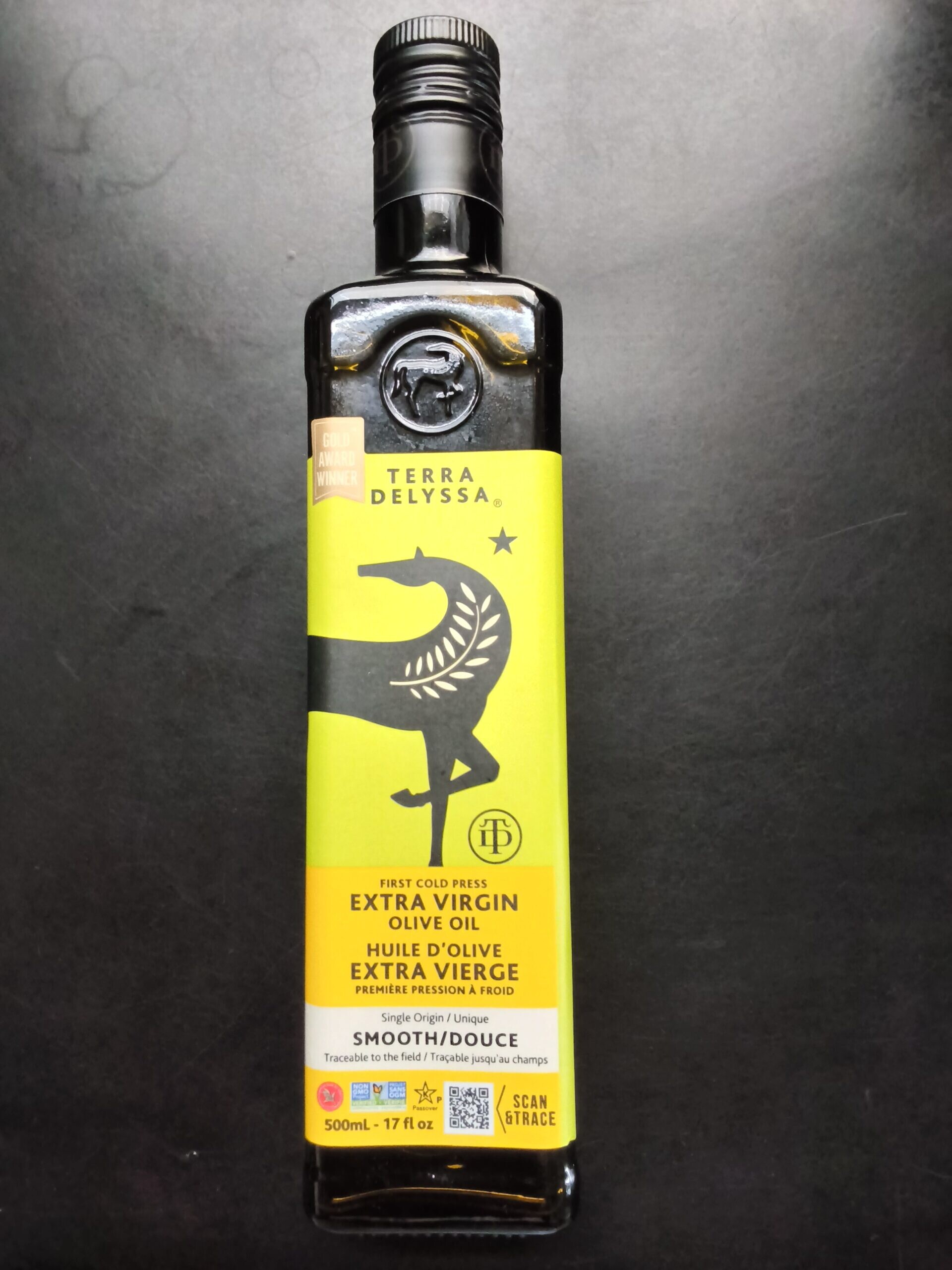
Terra Delyssa olive oil is the ambassador brand of Tunisian-owned CHO Group. The olives are grown primarily in Sfax- a semi-arid region of Tunisia. The company believing in sustainability, has converted desert land into olive groves and limits the use of pesticides. The olives are manually harvested by hand. Within hours of harvest the olives are cold-pressed and bottled.
Describe the supply chain to the store shelf in Canada:
Terra Delyssa has designed a system of vertical integration combined with the use of IBM blockchain technology to counter the historic Global North-Global South dynamic in trade. CHO Group owns and operates the olive groves, the mills,the processing facilities and bottling plants all within Tunisia. When the olive oil is ready for shipping it is exported via Mediterranean and Atlantic shipping routes to the Port of Montreal. The use of blockchain technology allows both the company and consumer to trace the farms, workers, processors,distributors and retailers through a transparent and accountable system.
What is the power balance between the producer and seller?
Tunisia is the largest producer of olive oil outside of the European Union and has historically been seen as a low-value bulk exporter, shipping its olive oil to European nations where it is blended, rebranded and sold for considerable profit under European food labels. Terra Delyssa has been able to create a system through their vertical integration business model to avoid this structural imbalance often reinforced by dominant global trade institutions. However small production farms and producers are still often trapped within a bulk exporting system that sees the Global South as a raw material reservoir.
Can you recommend changes to the system to improve the balance?
A large and well financed company like Terra Delyssa has found a blueprint for navigating global agricultural subsidies and tariff barriers as well as intellectual property protections to avoid the blending and rebranding of their olive oil. But for the vast majority of agricultural producers solutions continue to be found in the rewriting of trade and tariff laws to reflect a more fair global trading system that stops favouring wealthy nations and shifts away from the abuses and exploitation of smaller, developing nations.
References/Resources:
Fabricant, F. (2016, September 14). An olive oil revolution in Tunisia. The New York Times. https://www.nytimes.com/2016/09/14/dining/extra-virgin-olive-oil-tunisia.html
Terra Delyssa Canada. (n.d.). Our Story. https://www.terradelyssa.ca/pages/ourstory
Gonzalez,R. (2025, October 31). A trade union to defend the rights of Tunisia’s women farm labourers. (L. Durkin, Trans.). Equal Times. https://equaltimes.org/a-trade-union-to-defend-the-rights?lang=en
Radwan, S., Jamal, V.,& Ghose, A. (1991). Tunisia:rural labour and structural transformation. Routledge.
Verma, S. (2019). How blockchain and IoT is making supply chains smarter. IBM Think. https://ibm.com/think/topics/blockchain-for-supply-chain